

(6) The Posthumous Digital Self
Remembering the digital personhood post death and worldbuilding for love

I have been thinking about death a lot. Death that is near and far, foreign and personal, small and in masses. I know that I am scared of death because it feels foreign to me. But imagining the process of death, the process of exiting as I see fit, makes me acquainted with death a little bit more.
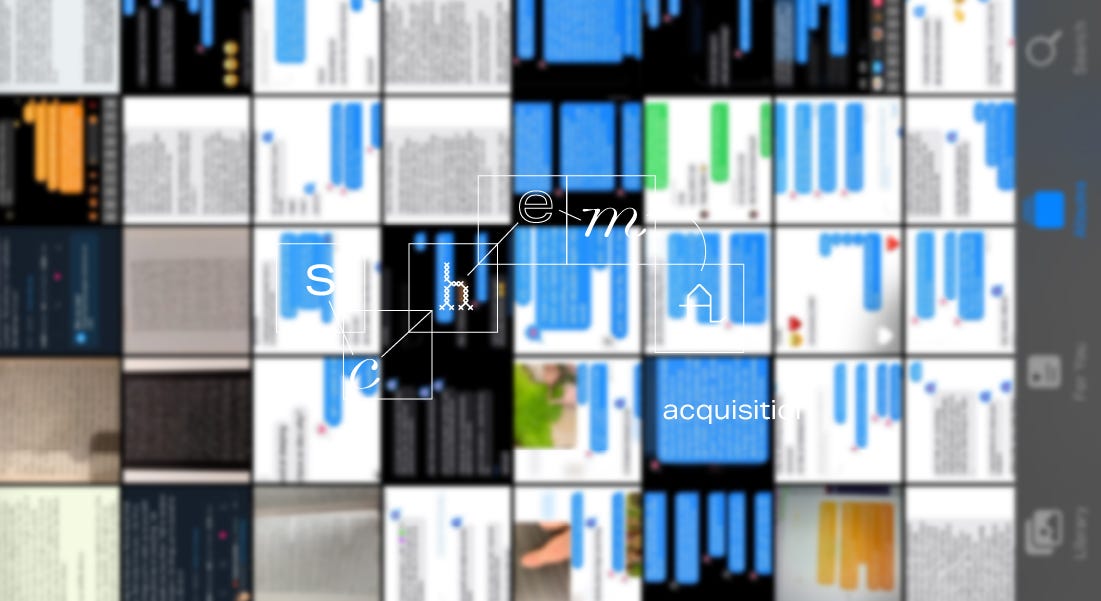
Looking through my iphone photo gallery and 12,458 images under the title “Recents”, I wonder how I have come to collect five digits worth of pictures, most of them probably being screenshots. There is a total of 38 albums, excluding those automatically generated by iphone. I have 573 mirror selfies, 385 DOOGLAS (my aunt’s cat named Douglas), 93 🧶 (my crochet and knit projects), 48 crazy sun & moon, 44 khangfies, 30 hinge (pickup lines I found very amusing), 15 puzzles of quarantine, 13 🦶(?), 3 ahana’s peahead being images of ahana’s smoothly shaven head. The album I frequent the most is “words”, a collection of screenshots of text conversations, scripts, excerpts, and letters I wish to remember. Here, there are conversations of love and musings, silly gestures and puns, words of encouragement, brainstorms, existential crises, friendship affirmations, and ah-ha moments. Here are some screenshots that caught my eye.
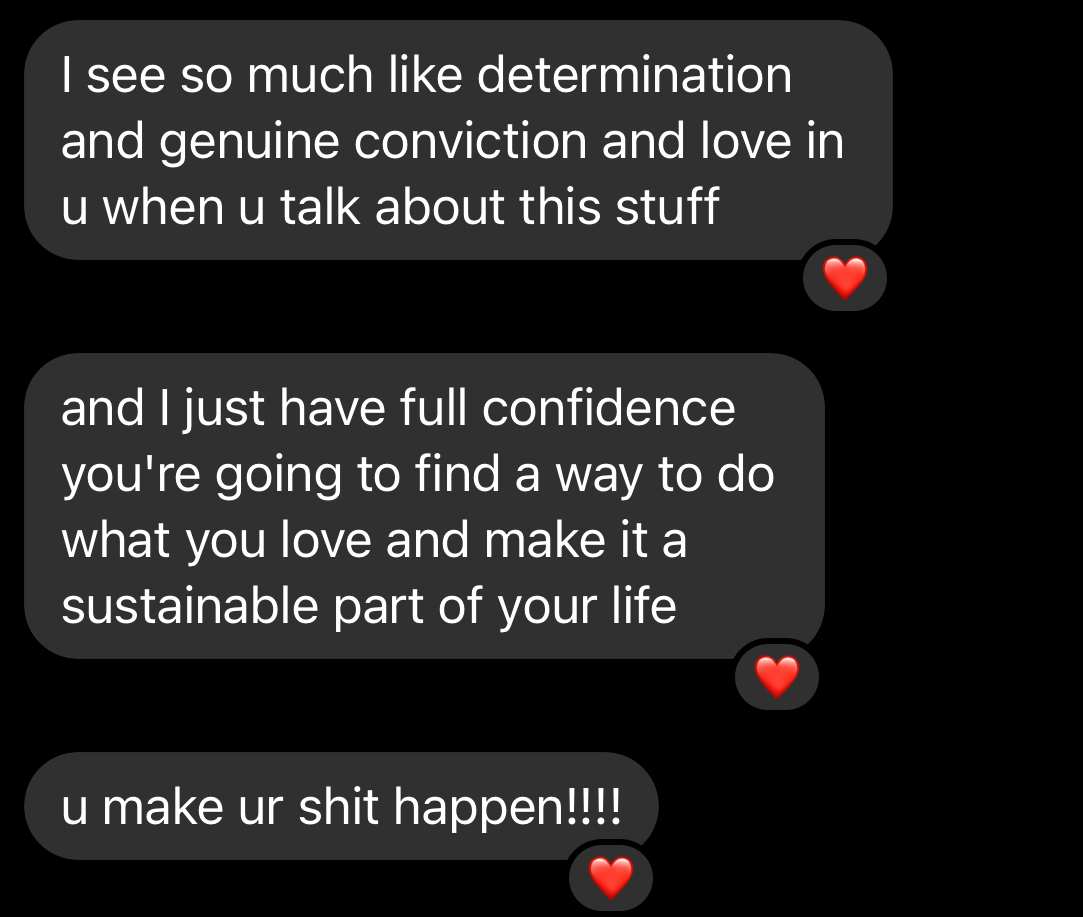
Words of love for my projects:
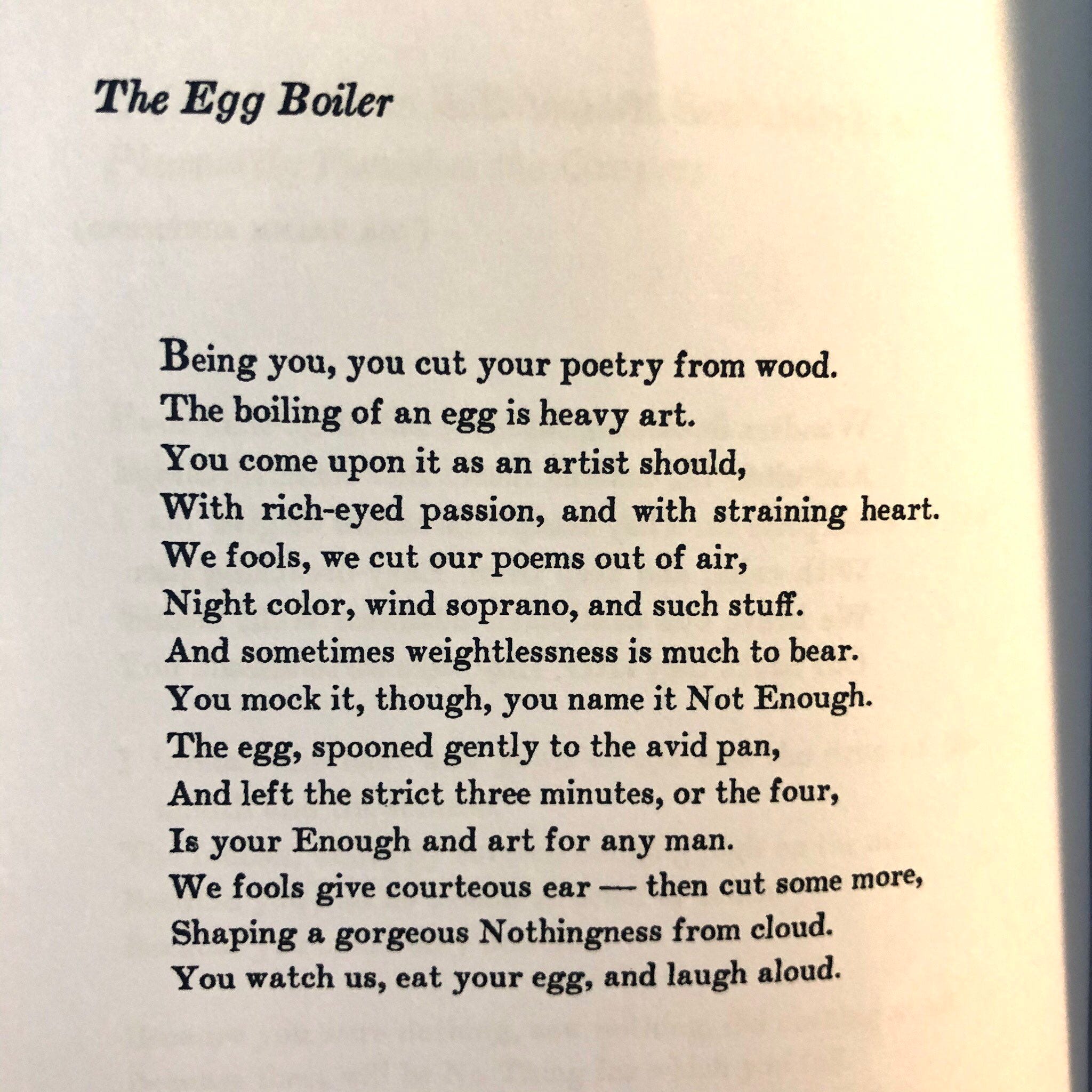
A reminder on craft:
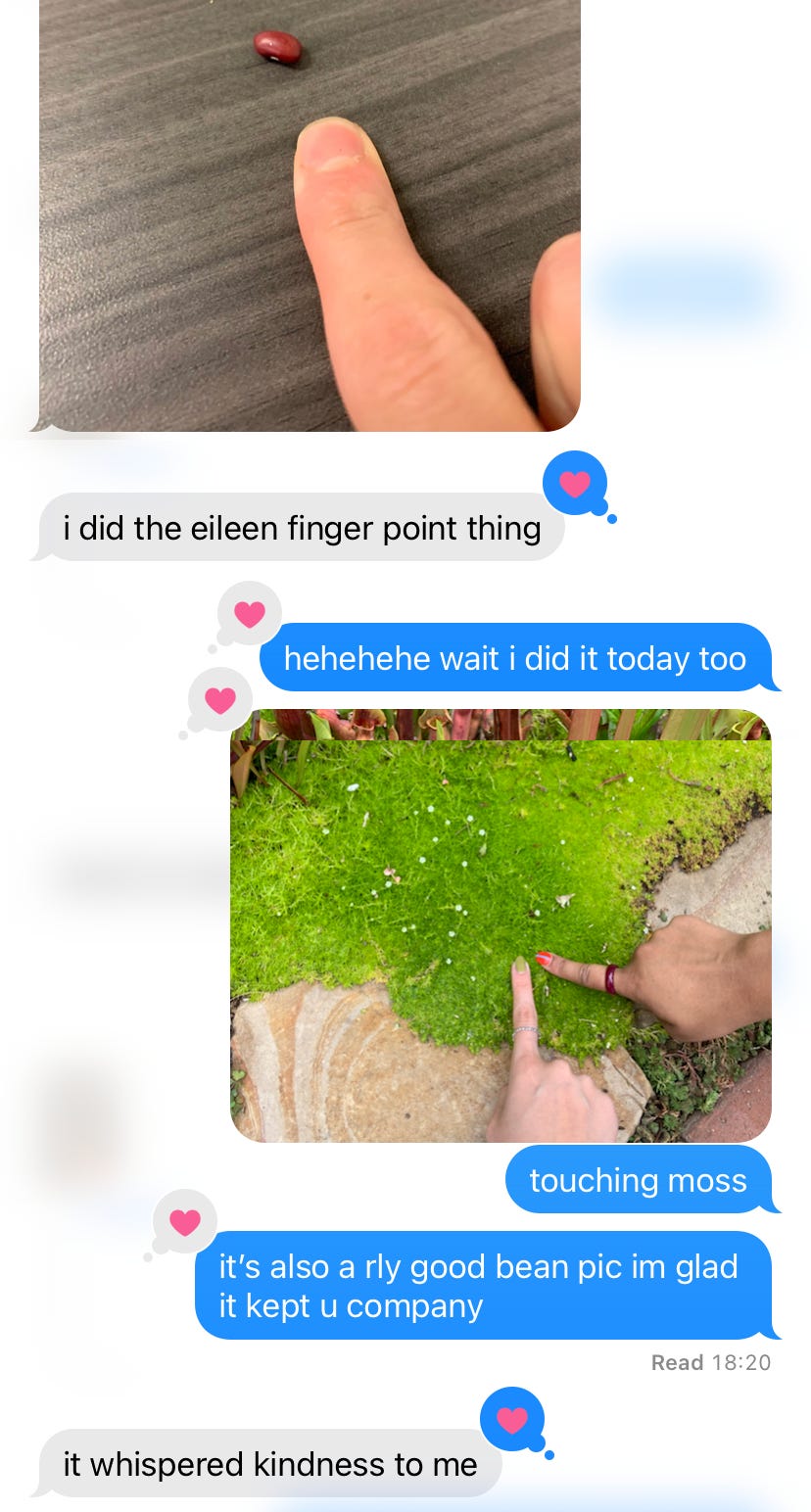
Touching and finding kindness:
The process of really knowing somebody:
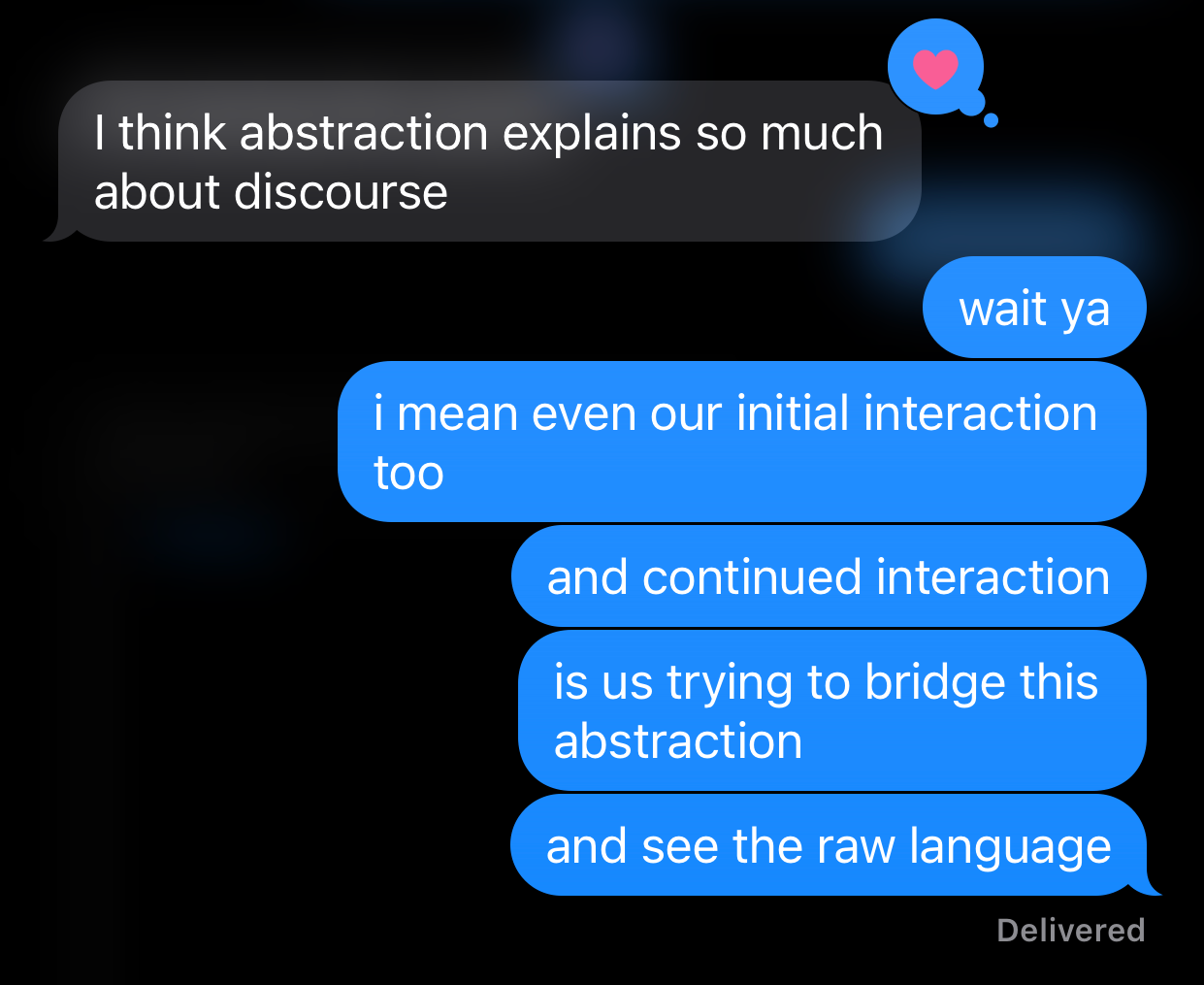
Daydreaming vs nightdreaming and how to get a life:
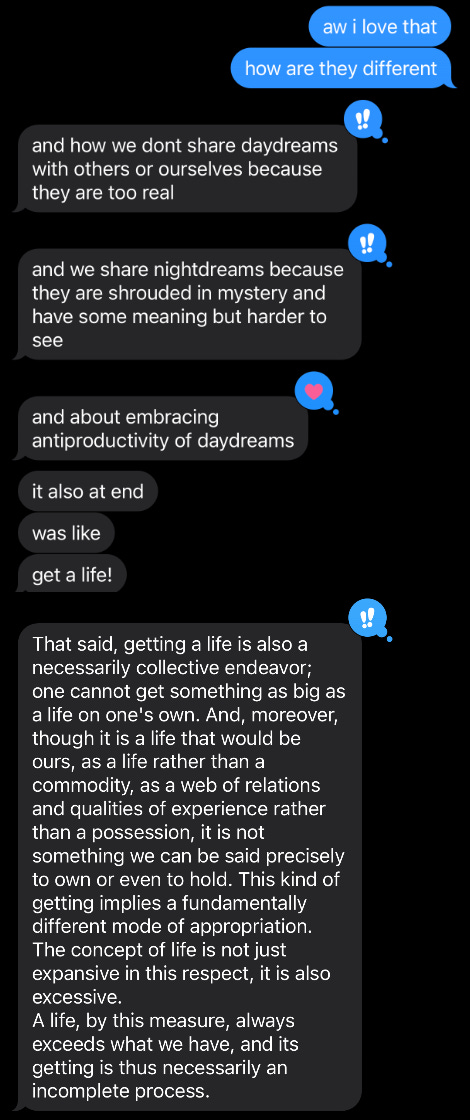
Memories and archives post-death:
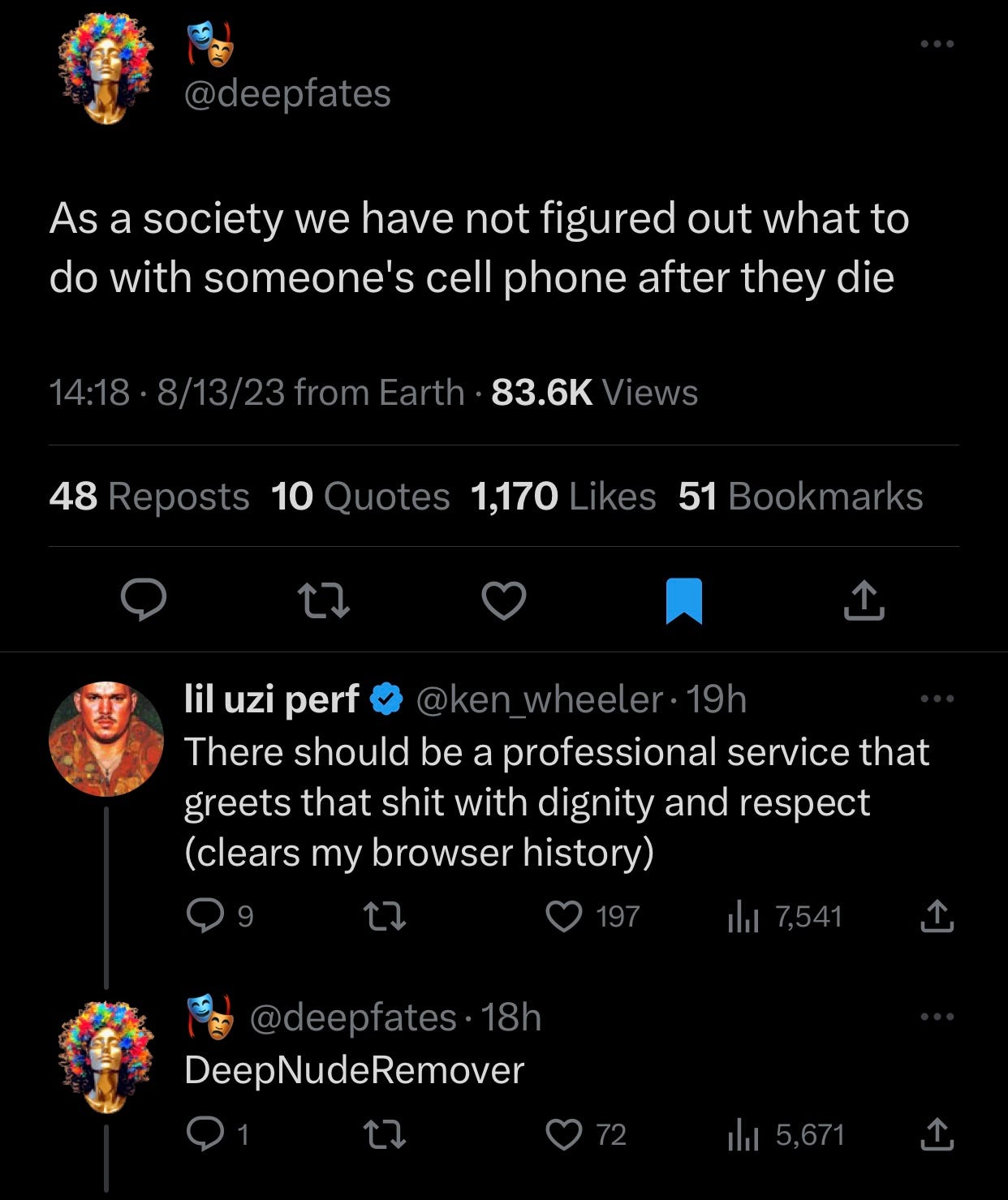
This tweet epitomizes the value of this collection — texts and screenshots scavenged over the years build and preserve my personhood in a deep repository, unshared, unknown, but accessible only to the self. Aside from the appeal of a professional service that removes my deep nudes, we truly have not figured out how to honor, archive, eradicate, and/or remember the digital footprints and personhoods of users post-death.
In 2009, facebook rolled out a feature for loved ones to turn deceased user pages into tribute pages. Timelines are preserved in their original state, but visitors can pay tribute on a separate tab to create a new tribute timeline. This feature fossilizes the account and data on the platform, forever being online.
I know that I do not wish to be memorialized on facebook. If anything, I would want people to know my relationship with the digital and the process of moving through the world as I know it. I want my loved ones to walk through my digital traces, scavenge buried writing drafts, browse my illustrator files, open my chrome bookmarks and extensions, read through my angry notes to failed hinge dates, crosscheck the dates of my beli reviews that double as a diary with the dates on my photo album, and ponder through screenshots that I failed to delete. I want them to claim images, share ideas that never saw the light of day to adopt as their own, put my resume on the fridge, and discover my very cringe and private pinterest boards.
I know that there is love in dedicated worldbuilding. Often, it is a practice that does not prioritize productivity or commercial needs, just a space for holding space, a space for love, a space for remembering. Post my departure, I hope someone builds a website with my face planted in the dead-center. I want to be remembered by flashing images that twirl and takis flying randomly under a ridiculously silly domain name.
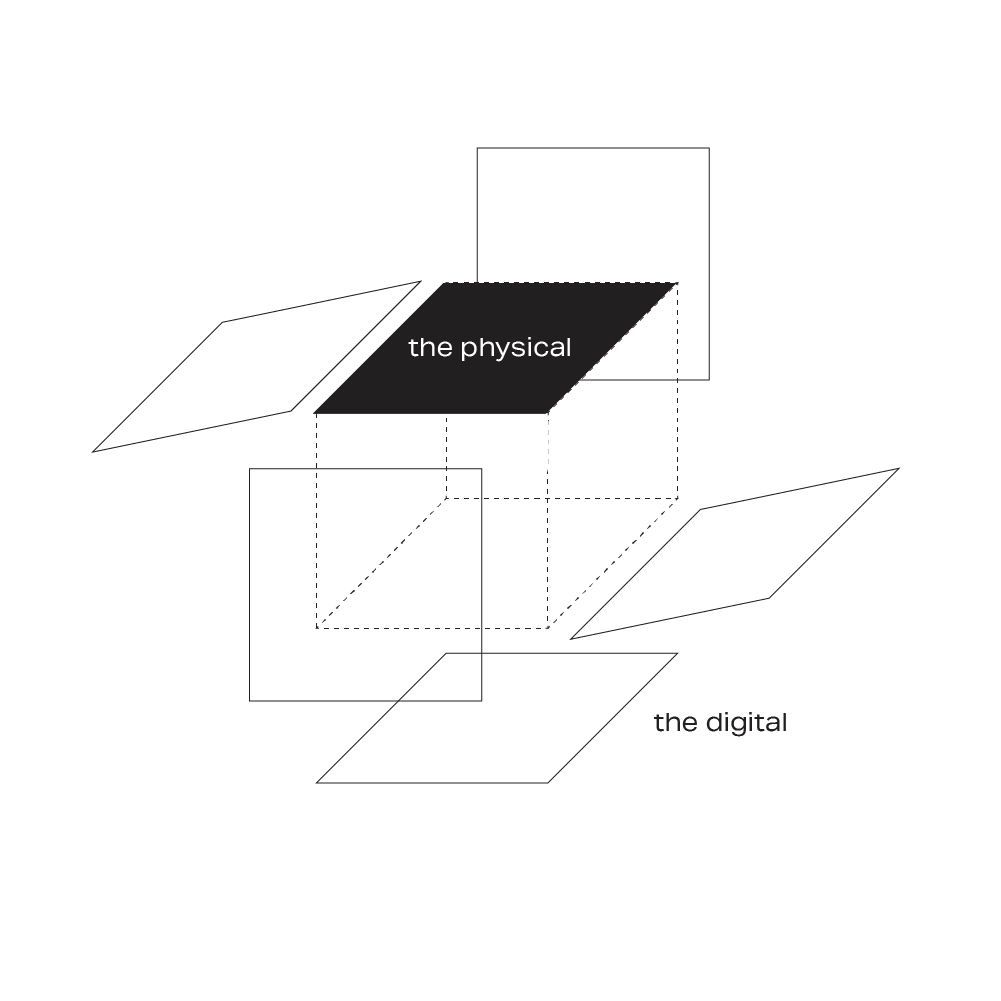
Thank you for being here and remembering me.
— Eileen
Websites that know how to love:
🏡 rite.house documents people’s rituals in a virtual home
📍 queeringthemap pins LGBTQ2IA+ stories on a map
🥟 dumpling.love takes users on a forest walk
👜 what’s in my bag documents contents in people’s bags
💗 digital love languages is a webzine about love
💌 when we love is a net art series about love
love love love